
Introduction
Traveling internationally with a dog requires more planning than booking a flight and buying a carrier. Different countries, airlines, and airports can have separate requirements. Your dog may need vaccinations, a microchip, health certificates, import permits, or other documents before departure.
If you are researching How to Fly Internationally with a Dog: Cabin Dimensions, Pet Passports, and IATA Rules, start preparing well before your travel date. International pet travel can take weeks or even months, depending on your destination. USDA APHIS recommends contacting an accredited veterinarian as soon as you decide to travel.
The airline also matters. An airline may have its own rules for cabin pets, carrier dimensions, breed restrictions, weight limits, and documentation. Meeting a country’s entry requirements does not automatically mean your dog meets the airline’s boarding requirements.
How to Fly Internationally with a Dog
The first step is to research your destination country’s official pet-entry rules. Every country establishes its own requirements, so there is no universal international pet passport that works everywhere.
Depending on the destination, your dog may need a microchip, rabies vaccination, additional vaccines, parasite treatments, laboratory testing, or an official health certificate. Some destinations also impose specific timelines between vaccination, testing, and arrival.
If you are leaving the United States, USDA APHIS explains that destination countries determine the requirements for pets entering their territory. A health certificate may need to be completed by a USDA-accredited veterinarian and endorsed by USDA.

This means you should not wait until the week before your flight. Some veterinary procedures and laboratory tests have mandatory waiting periods. Your veterinarian can create a timeline based on your dog’s destination and travel date.
Do Dogs Need a Pet Passport for International Travel?
A common question is whether dogs need a pet passport when traveling internationally. The answer depends on the countries involved.
The United States does not issue a universal pet passport for international travel. Instead, dogs traveling from the United States generally need documentation showing that they meet the destination country’s specific entry requirements.
Some regions and countries use passport-style veterinary documentation, while others rely on official health certificates. Therefore, travelers should not assume that a document accepted in one country will automatically work somewhere else.
Your dog’s vaccination records should also be kept organized. Rabies documentation is particularly important because many countries require proof of current rabies vaccination.
If your trip includes a connecting country, check its requirements as well. Transit rules can matter when your dog must leave the airport or clear customs during a connection.
Understanding International Dog Health Certificates
A health certificate confirms that your dog meets specific health requirements for the destination. The certificate may need to contain information about vaccinations, identification, treatments, laboratory testing, and veterinary examination.
The exact certificate depends on the destination country. USDA APHIS specifically states that there is no single health certificate that works for every country.
Timing is equally important. Some countries accept certificates only when they are issued within a specific period before arrival. Others require the certificate to be endorsed by an official authority.
For travelers departing from the United States, a USDA-accredited veterinarian can help determine the necessary documentation. When USDA endorsement is required, the veterinarian can submit the certificate through the Veterinary Export Health Certification System.
What Are IATA Rules for Flying With a Dog?
IATA provides widely used guidance for transporting dogs and cats by air. However, IATA guidance does not replace the rules of an airline or destination country.
One of the most important considerations is the travel container. Your dog must have enough room to stand naturally, sit, turn around, and lie down in a normal position. IATA provides formulas for determining appropriate internal container dimensions based on the animal’s measurements.
For a single animal, IATA’s guidance uses the dog’s body measurements to determine minimum internal length and width. The height calculation also accounts for bedding when determining the required internal height.
This is important because buying a carrier simply because it fits under an aircraft seat may not be enough. The carrier must satisfy the airline’s specific requirements while still providing suitable space for your dog.
Always check your airline’s current carrier specifications before purchasing a travel carrier. Aircraft types can also affect the amount of space available beneath a seat.
What Are the Cabin Dimensions for a Dog Carrier?
There is no single cabin carrier dimension that applies to every international flight. Airlines establish their own maximum dimensions based on aircraft configuration and under-seat space.
For this reason, travelers should contact the airline before buying a carrier. Ask for the exact maximum dimensions permitted for an in-cabin pet on your specific flight.
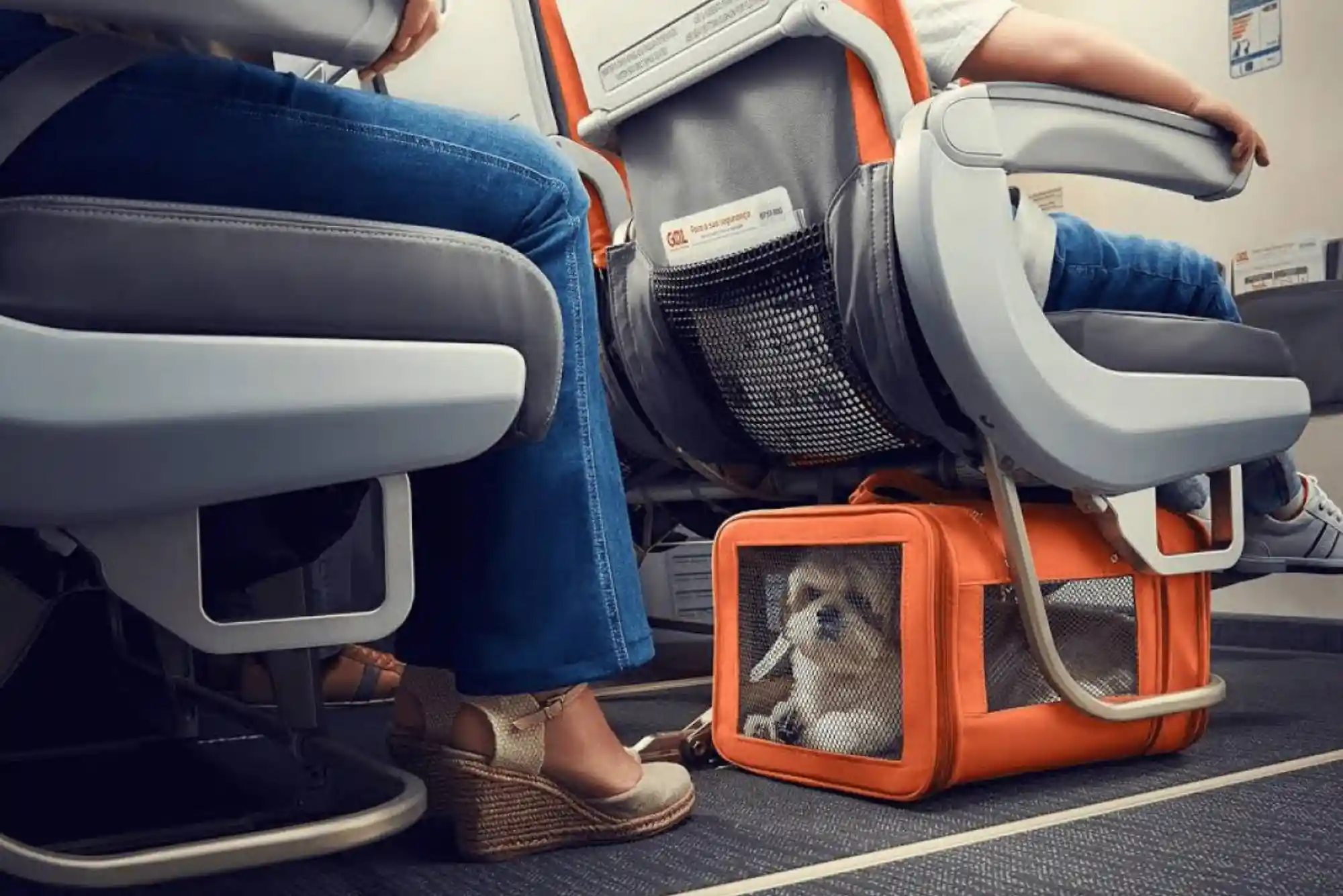
The carrier generally needs to remain under the seat during the flight. Your dog normally stays inside the carrier for the journey, although individual airline policies can vary.
Soft-sided carriers may provide more flexibility because they can sometimes compress slightly under the seat. However, they still need to comply with the airline’s requirements and provide adequate ventilation and space.
IATA’s guidance emphasizes that dogs should be able to stand, turn around, sit naturally, and lie down comfortably in their container.
Can Large Dogs Fly in the Cabin?
Large dogs often cannot travel in the passenger cabin because of carrier and under-seat space limitations. In such cases, an airline may offer other transportation arrangements, depending on its current pet policy.
IATA notes that cabin travel is not always possible, particularly when an animal is too large or when an airline does not permit pets in the cabin.
Do not assume that paying for an additional passenger seat will allow your dog to sit beside you. Airline policies determine where pets can be transported.
Before booking, confirm whether your dog’s size, breed, carrier, and travel route are accepted. Also check whether the airline places restrictions on specific breeds or temperature conditions.
How Should You Prepare Your Dog for an International Flight?
Preparation should begin before the travel day. Your dog should be comfortable entering and remaining in its carrier. Gradual carrier training can make the experience less stressful.
Allow your dog to spend short periods inside the carrier at home. Gradually increase the time while keeping the experience calm and positive.
Your veterinarian can also assess whether your dog is suitable for air travel. APHIS guidance emphasizes appropriate temperament and documentation for dogs traveling by air.
Avoid giving your dog sedatives unless specifically directed by a veterinarian. Medication can affect animals differently during air travel, so any decision about medication should be discussed with a qualified veterinary professional.
You should also consider feeding and hydration before departure. Follow your veterinarian’s advice and the airline’s instructions regarding food and water before and during the journey.
What Documents Should You Carry?
International dog travel requires careful document management. Keep your dog’s original documents accessible rather than placing everything inside checked luggage.
Depending on the destination, documentation can include vaccination records, rabies certificates, microchip information, health certificates, laboratory results, import permits, and other government forms.
If your journey involves returning to the United States, check U.S. entry requirements before leaving. CDC rules can depend on where the dog has been during the previous six months and where the dog was vaccinated.
For example, dogs entering the United States must have a CDC Dog Import Form receipt. Dogs that have been in high-risk countries for dog rabies may face additional requirements.
Therefore, international travel planning should include both the outbound journey and the return journey.
What Happens During International Pet Travel?
At the airport, allow additional time for check-in. Airline staff may inspect your dog’s documents, carrier, and reservation.
Your dog may also need to meet specific check-in procedures. These procedures vary between airlines and airports.
After landing, your dog may be inspected by border, customs, agriculture, or veterinary authorities. Officials can check the animal and its documentation before allowing entry.
If documents are missing or requirements have not been met, your dog could face delays or other entry problems. CDC warns that failure to comply with U.S. dog importation requirements can result in the dog being denied entry and returned to the departure country at the owner’s expense.
Frequently Asked Questions
Can I take my dog on an international flight?
Yes, dogs can travel internationally by air when the airline permits pets and the dog satisfies the destination’s entry requirements. Airline rules determine whether your dog can travel in the cabin or must use another approved transportation option.
What size carrier can I use for my dog on an international flight?
Carrier dimensions depend on the airline and aircraft. The carrier must fit within the airline’s approved space and provide suitable room for your dog. IATA recommends enough internal space for the animal to stand, turn around, sit, and lie naturally.
Does my dog need a passport to fly internationally?
Not necessarily. The required documentation depends on the destination country. The United States does not issue a universal pet passport and instead uses destination-specific health certificates and other documents.
How early should I prepare my dog for international travel?
Start as soon as your trip is confirmed. Some destinations require vaccinations, testing, treatments, or certificates within specific timeframes. USDA APHIS notes that preparation can take anywhere from several weeks to several months.
Can I bring my dog into the United States after international travel?
Yes, but the dog must meet current U.S. entry requirements. CDC requirements depend on factors such as the countries visited during the previous six months and the dog’s rabies vaccination status.
Conclusion
Knowing How to Fly Internationally with a Dog: Cabin Dimensions, Pet Passports, and IATA Rules can make international pet travel much easier to manage. The most important step is starting early and checking official requirements.