
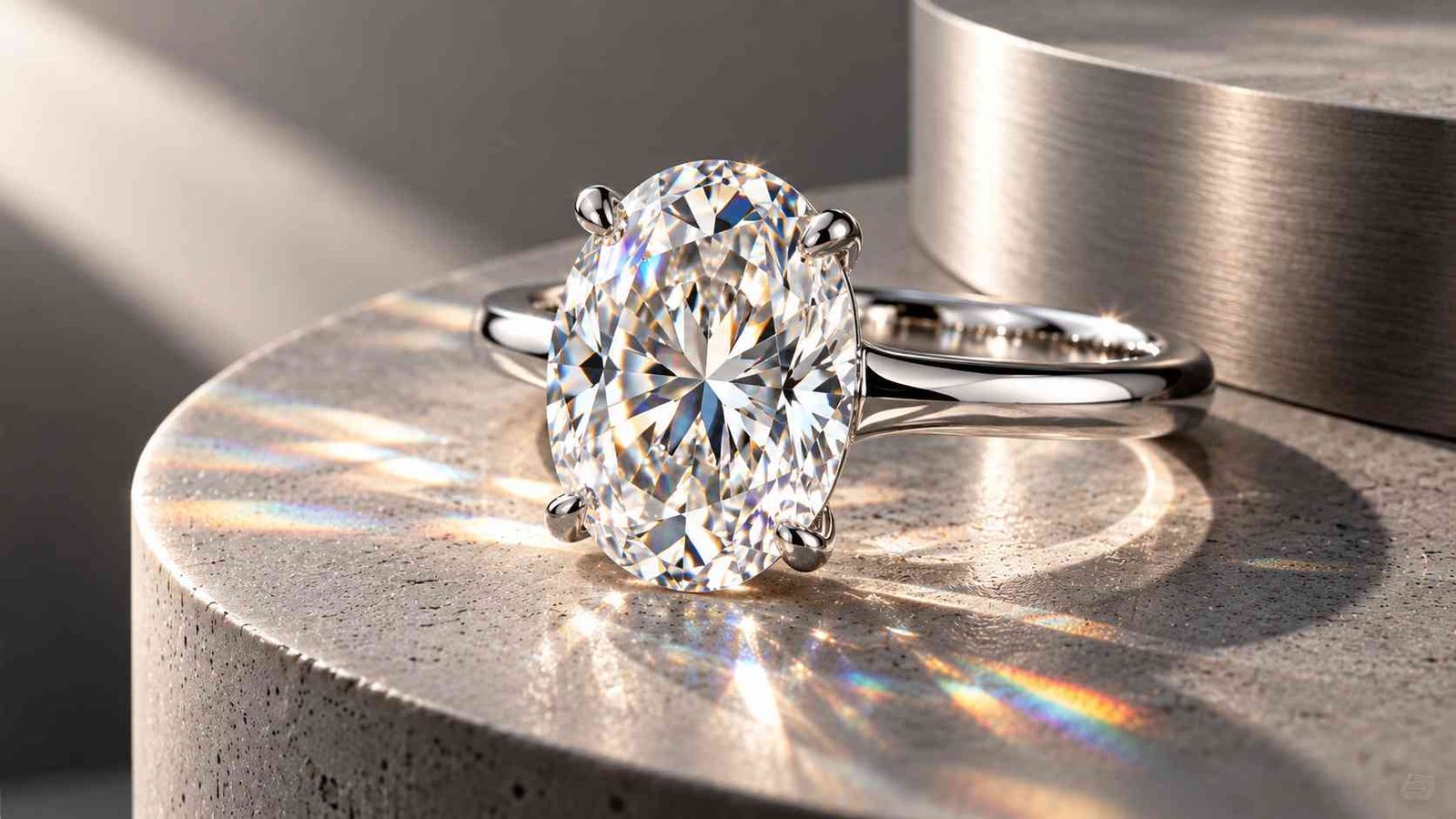
Few milestone purchases carry the emotional weight and enduring symbolism of an engagement ring. As a physical token of lifelong commitment, an heirloom piece should embody positive principles—celebrating love without the heavy environmental toll of open-pit earth moving or complex supply chains. This shift in mindset has propelled laboratory-created gemstones into the global spotlight, making lab diamond engagement rings the premier choice for modern, forward-thinking couples.
From London to Madrid, modern couples are choosing diamonds created with technological precision. As European consumers explore the clear advantages of brillantes de laboratorio, fine jewellery is shifting toward complete transparency, exceptional visual clarity, and accessible value. This guide explores the science behind lab-grown diamonds, examines the environmental reasons driving this transition, and outlines key criteria for choosing your ideal ring.
The Science of Crystallization: Identical in Every Measure
A frequent question among first-time fine jewellery buyers is whether lab-created gems can match the physical and optical performance of earth-mined diamonds. The gemological answer is definitive: chemically, physically, and optically, laboratory diamonds are authentic diamonds. They are not imitations, simulants, or coated crystals like cubic zirconia or glass substitutes.
Every laboratory diamond is composed of 100% pure elemental carbon organized into an isometric crystal lattice. They share the same properties as geological stones: a hardness rating of 10 on the Mohs scale, an identical refractive index of 2.417, and matching light dispersion. Master technicians produce these gems using two cutting-edge scientific processes:
- Chemical Vapor Deposition (CVD): A precision-sliced diamond seed is placed inside an ultra-high vacuum chamber filled with hydrocarbon gases like methane and hydrogen. When energized by microwave plasma torches, the molecular bonds disintegrate, letting pure carbon atoms settle onto the seed substrate layer by atomic layer to form rough diamond crystals.
- High Pressure High Temperature (HPHT): Utilizing heavy hydraulic presses, pure carbon is subjected to temperatures topping 1,500 degrees Celsius and mechanical pressures exceeding 55,000 atmospheres. These parameters recreate the extreme geological conditions found deep in the Earth’s upper mantle, causing carbon to crystallize into gem-quality diamond.
Once grown, raw crystals are cut and polished by hand using the same diamond-tipped tools used on mined stones. Independent gemological authorities—including the International Gemological Institute (IGI) and the Gemological Institute of America (GIA)—evaluate lab-created stones under the standard 4Cs: Cut, Clarity, Color, and Carat weight, issuing full certificates that verify their natural properties.

Comparative Overview: Evaluating Gemstone Integrity
To provide a clear, factual comparison between modern cultivated diamonds and other alternatives on the market, the following table highlights their critical physical, optical, and environmental benchmarks:
| Benchmark Property | Laboratory Diamond | Subterranean Mined Diamond | Moissanite | Cubic Zirconia (CZ) |
|---|---|---|---|---|
| Chemical Structure | Pure Carbon (C) | Pure Carbon (C) | Silicon Carbide (SiC) | Zirconium Dioxide (ZrO2) |
| Mohs Hardness | 10.0 (Maximum Durability) | 10.0 (Maximum Durability) | 9.25 | 8.0 – 8.5 |
| Refractive Index | 2.417 | 2.417 | 2.65 – 2.69 | 2.15 – 2.18 |
| Light Dispersion (Fire) | 0.044 | 0.044 | 0.104 (Disco Effect) | 0.060 |
| Environmental Impact | Controlled Footprint (Clean Power) | High Terrestrial Disturbance | Low Industrial Footprint | Low Industrial Footprint |
| Supply Chain Transparency | Direct Provenance Tracking | Complex Global Aggregation | Commercial Production | Low-Cost Manufacturing |
| Lifetime Heirloom Durability | Permanent / Unalterable | Permanent / Unalterable | High Durability | Scratches & Clouds Over Time |
Environmental and Humanitarian Advantages
Beyond optical brilliance, the main appeal of laboratory gems lies in their verifiable ethical foundation. Traditional open-pit mining requires removing thousands of tons of rock and soil to produce a single finished carat, which disrupts local topography and ecosystems.
Additionally, conventional mining uses significant water supplies for ore washing and processing. By contrast, indoor diamond cultivation takes place in contained facilities with minimal land footprint. As modern laboratories transition to renewable energy sources—such as wind, solar, and local hydroelectric power—the carbon profile of lab gems continues to decrease.
From a humanitarian standpoint, lab-created diamonds provide complete peace of mind. Every stone can be traced directly from its growth facility to the final mounting. For modern couples who value social responsibility, this provenance offers clear ethical assurance.
Smart Financial Value: Maximizing Beauty Without Compromise
A practical benefit of choosing laboratory gemstones is their financial efficiency. Because lab diamonds bypass prolonged distributor networks and extraction monopolies, they are available at a substantial cost saving compared to mined stones of matching grade.
This allows couples to reallocate their wedding and lifestyle budgets smartly, achieving higher benchmarks without overspending:
- Upgraded Cut Quality: Couples can select an “Ideal” or “Triple Excellent” cut, maximizing brilliance and sparkle.
- Substantial Carat Presence: Achieving larger carat sizes—such as moving from a 1.0-carat to a 2.0-carat or 2.5-carat center stone—becomes feasible within a realistic budget.
- Higher Clarity Grades: Buyers can choose eye-clean VS1, VVS2, or flawless grades while remaining confident in the structural integrity of their stone.
- Investments in Metalwork: Budget savings can be directed into high-grade recycled platinum, solid 18k gold bands, and bespoke handcrafted settings.
Popular Design Trends in Contemporary Engagement Rings
Modern jewellery design pairs traditional elegance with clean, contemporary lines. Couples designing bespoke settings often draw on these popular trends:
1. Elongated Fancy Diamond Shapes
While the classic round brilliant cut remains an enduring staple, modern brides are increasingly drawn to fancy shapes with elongated proportions. Oval, emerald, and elongated cushion cuts visually lengthen the finger while showcasing a generous surface area, producing an eye-catching silhouette.
2. Secure Bezel Settings
Moving away from traditional high-sitting four-prong mounts, many couples prefer low-profile bezel or semi-bezel settings. By wrapping the diamond’s edge in a fine collar of platinum or yellow gold, a bezel setting protects against everyday impacts—an ideal choice for active, hands-on lifestyles.
3. Hidden Halo & Pavé Under-Galleries
Subtle, understated details define modern luxury. A hidden halo setting surrounds the base of the center stone with tiny, precision-set micro-diamonds. This detail leaves the primary diamond visible from the top while offering an eye-catching flash of sparkle when viewed from the profile.
4. Warm Yellow Gold & Mixed-Metal Bands
After years of white gold and platinum dominance, rich 18k yellow gold and two-tone combinations have made a strong return. Setting an icy, colorless diamond in platinum prongs on a warm yellow gold band provides structural safety while celebrating classic warmth and modern contrast.
A Buyer’s Checklist for Selecting a Lab Diamond Ring
To choose an heirloom ring with confidence, keep these four essential buying steps in mind:
- Insist on Independent Certification: Ensure your diamond includes an internationally recognized gemological grading certificate from organizations like IGI or GIA. Confirm that the serial number on the report matches the micro-laser inscription on the diamond’s girdle.
- Examine the Cut Proportions First: A diamond’s cut determines how effectively it reflects and returns light. Always prioritize cut proportions over pure carat size or clarity; an excellently cut stone will look brighter, larger, and more vibrant.
- Look for “Eye-Clean” Clarity: Instead of paying premium prices for Flawless (FL) or Internally Flawless (IF) ratings, look for stones graded VS1 or VS2. These stones are completely clean to the naked eye under everyday lighting conditions.
- Choose Certified Recycled Metals: A truly sustainable ring pairs an ethical stone with a responsibly sourced band. Choose jewelers who utilize 100% recycled platinum, gold, or silver to keep your ring’s environmental footprint minimal.
Conclusion: An Heirloom for the Future
True luxury today is defined by conscious intent, transparency, and personal meaning. A lab-created diamond engagement ring represents a milestone of commitment, celebrating personal romance alongside modern values of ecological respect and mindful living.
By blending advanced material science with timeless bench craftsmanship, laboratory-grown diamonds provide a brilliant, responsible, and lasting path forward. Choosing an ethical diamond ring means embracing the future with clarity, elegance, and lasting pride.
Related Reading: Precision Metal Detection and the Evolution of Modern Prospecting
Related Reading: Key features of modern trading platforms for institutional grade asset management

