
Introduction
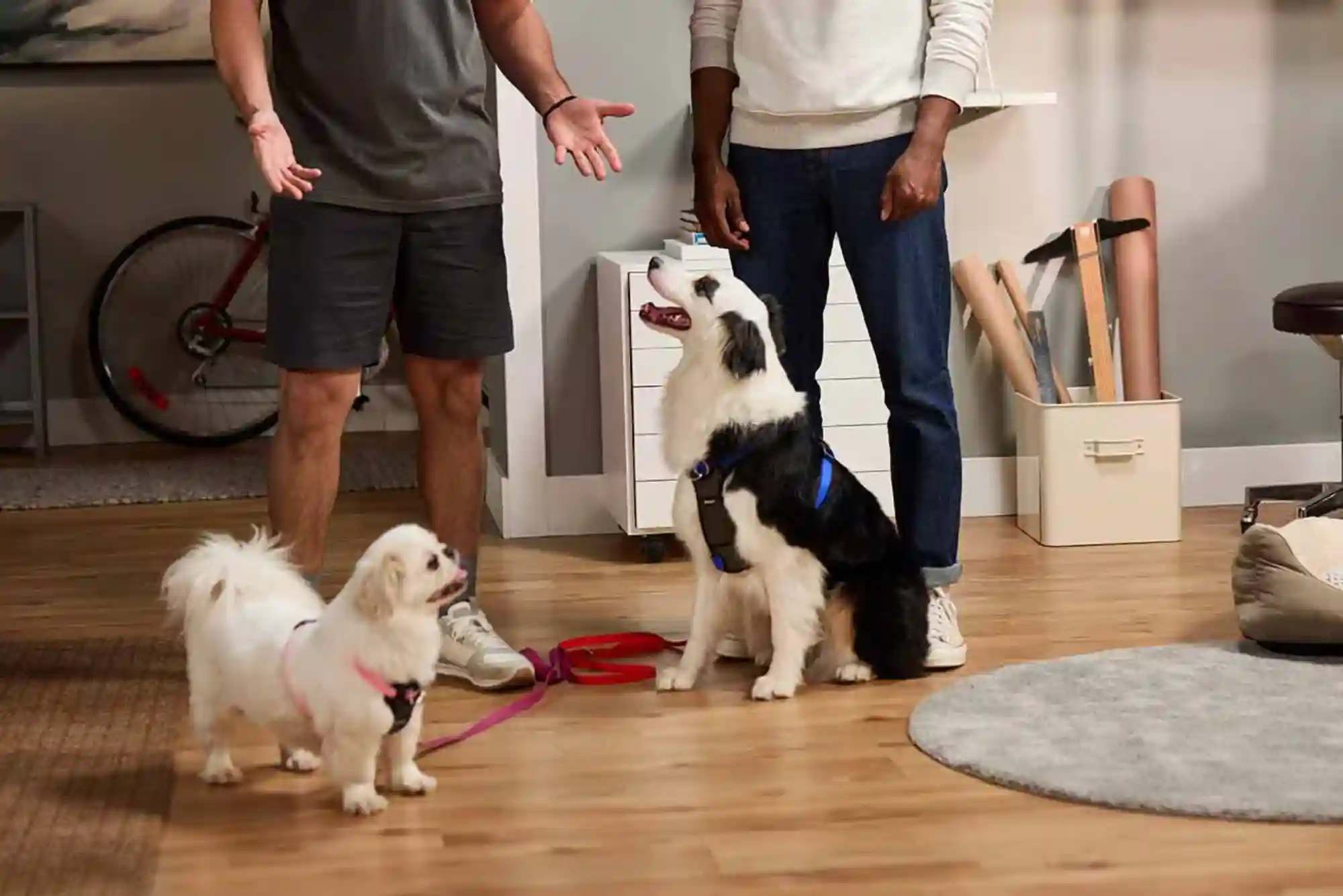
Introducing two adult dogs requires patience, planning, and careful observation. Even friendly dogs can react badly when meeting an unfamiliar dog. The right introduction can reduce tension and create a positive foundation.
If you are wondering how to introduce two adult dogs on neutral territory without fighting, start away from both dogs’ homes. Neutral territory removes much of the territorial pressure that can trigger defensive behavior.
The goal is not to make the dogs become friends immediately. Instead, the first meeting should help both dogs feel safe and relaxed. Their comfort should guide the pace of every interaction.
Why Neutral Territory Matters
Dogs can become protective of familiar spaces. A home, yard, crate, or favorite resting area may feel like personal territory. An unfamiliar dog entering that space can create unnecessary tension.
Neutral territory gives both dogs a chance to explore without immediately defending their resources. A quiet sidewalk, open park, or unfamiliar walking route can work well.
However, the location should not be crowded. Busy dog parks can create too much excitement during a first meeting. Choose an area with enough space for both handlers to move comfortably.

When learning how to introduce two adult dogs on neutral territory without fighting, remember that distance is useful. Dogs do not need to greet nose-to-nose immediately.
Prepare Both Dogs Before the Meeting
Preparation begins before the dogs see each other. Both dogs should have appropriate identification and secure equipment. Use sturdy leashes and well-fitted collars or harnesses.
Avoid retractable leashes during the introduction. They can make distance control more difficult. A standard leash gives the handler better control while allowing natural movement.
Take each dog for a calm walk beforehand. Avoid exhausting the dogs through intense exercise. The goal is to reduce excess energy without creating fatigue or frustration.
Food should also be managed carefully. Do not bring high-value treats that could create competition between the dogs. Small treats can still help reward calm behavior when appropriate.
If either dog has previously shown serious aggression, professional guidance is important. A qualified veterinary behaviorist or experienced reward-based trainer can help create a safer plan.
Start With Distance
One of the most important principles is simple: do not rush the greeting.
Begin with the dogs far enough apart that neither dog reacts strongly. Each handler should walk in the same general direction. The dogs can notice each other without being forced into close contact.
Watch their body language carefully. A relaxed dog may have loose muscles, natural movement, and a soft facial expression. A worried dog may freeze, avoid eye contact, tuck its tail, or repeatedly lick its lips.
Some dogs become overly excited instead of fearful. Pulling, barking, whining, or staring can indicate that the distance is currently too small.
If either dog becomes tense, increase the distance. This is not failure. It is useful information about the dog’s comfort level.
As both dogs remain calm, gradually reduce the distance. This approach is central to how to introduce two adult dogs on neutral territory without fighting.
Walk the Dogs in Parallel
Parallel walking is often more comfortable than a direct introduction. The dogs move in the same direction while maintaining space between them.
This setup reduces pressure because neither dog must approach the other directly. Walking also gives the dogs something natural to focus on.
Keep the leashes reasonably loose. Constant leash tension can increase frustration or make a nervous dog feel trapped.
Handlers should remain calm and avoid forcing interaction. Allow the dogs to observe each other naturally.
Over time, you can gradually decrease the distance. Continue watching their body language throughout the walk.
If both dogs remain relaxed, they may eventually walk closer together. If tension appears, simply create more space again.
Allow a Brief Greeting
Once both dogs appear comfortable, allow a short greeting. Let them approach from an angle rather than forcing them directly together.
Avoid holding the dogs tightly while they sniff. Excessive restraint can increase frustration. Give each dog enough room to move away if needed.
A brief sniff is enough for the first interaction. You do not need to let the dogs remain face-to-face for a long period.
After several seconds, calmly separate them and continue walking. This prevents excitement from building too quickly.
You can repeat short greetings if both dogs remain relaxed. Gradual interaction is generally safer than one long, uncontrolled meeting.
This is one of the most practical answers to how to introduce two adult dogs on neutral territory without fighting.
Learn to Read Canine Body Language
Body language provides valuable information during an introduction. Experienced handlers watch the entire dog rather than focusing only on barking.
A relaxed dog may move naturally and sniff the environment. Its body often appears loose rather than rigid.
By contrast, stiffness can signal discomfort. A hard stare, raised hackles, closed mouth, freezing, or intense pulling deserves attention.
A wagging tail does not automatically mean a dog is friendly. Tail movement must be considered alongside posture and facial expression.
Yawning, lip licking, turning away, or repeatedly shaking off can also indicate stress. These signals do not necessarily mean aggression. They may show that the dog needs more space.
When you notice early stress signals, calmly increase distance. Responding early can prevent a situation from escalating.
Avoid Common Introduction Mistakes
Many problems happen because people move too quickly. They assume dogs should immediately sniff, play, or interact.
That expectation can create unnecessary pressure.
Another common mistake is introducing dogs inside the home first. The resident dog may feel responsible for protecting its space. The visiting dog may also feel uncertain.
Allowing toys, food bowls, or prized objects during the first meeting can create additional competition. Keep the initial environment simple.
Handlers should also avoid punishing growling. Growling is communication. It can tell you that a dog feels uncomfortable.
Instead of correcting the warning, calmly create more distance. Then reassess the situation.
Avoid letting the dogs become tangled in their leashes. Tangling can increase panic and make handlers lose control.
Keep the First Meeting Short
A successful introduction does not need to last for hours. Short, positive interactions can be more useful than prolonged contact.
Watch for signs of tiredness or overstimulation. Even dogs that initially behave well can become irritable when overwhelmed.
End the meeting while both dogs are still reasonably calm. This creates a better foundation for the next interaction.
If the dogs will eventually live together, continue with additional controlled meetings. Each meeting can gradually become more natural.
The dogs should not be expected to share everything immediately. Give them time to develop familiarity.
Introducing Dogs That Will Live Together
If the dogs will share a home, neutral-territory introductions are only the beginning.
After a successful outdoor meeting, enter the home carefully. Remove valuable toys and other items that could cause competition.
Give each dog its own feeding area. Separate beds and resting spaces can also reduce unnecessary conflict.
Supervise early interactions closely. Do not assume that a calm first meeting guarantees permanent compatibility.
Allow each dog to have quiet time away from the other. Separate spaces can help both animals decompress.
Gradually increase shared activities as the dogs become more comfortable.
What If One Dog Reacts Aggressively?
A difficult reaction does not mean the introduction is impossible. However, safety should always come first.
If a dog lunges, snaps, repeatedly attempts to bite, or cannot settle despite increased distance, stop the introduction.
Do not attempt to physically force the dogs together. Avoid putting your hands between fighting dogs.
Instead, use distance and barriers whenever possible. Once everyone is safe, reassess the introduction plan.
For dogs with a history of serious aggression, professional assistance is strongly recommended. A veterinary behaviorist can help identify triggers and develop an appropriate behavior-modification strategy.
The safest approach to how to introduce two adult dogs on neutral territory without fighting is always based on prevention rather than reacting after a fight begins.
How Long Should Dog Introductions Take?
There is no universal timeline for adult dogs. Some dogs become comfortable within several meetings. Others need weeks of controlled interaction.
Age, temperament, previous experiences, socialization, and individual triggers all matter.
Avoid comparing your dogs with someone else’s pets. Their progress should be measured by their behavior.
Calmly walking near each other is meaningful progress. Relaxed sniffing is another positive sign. Choosing to disengage peacefully is also valuable.
Friendship does not need to happen immediately. Peaceful coexistence is the first important goal.
When Should You Seek Professional Help?
Professional help is appropriate when introductions repeatedly produce intense reactions.
You should also consider professional support if either dog has a known bite history. Resource guarding, severe fear, or unpredictable aggression can also require specialized guidance.
Choose professionals who use humane, evidence-based behavior techniques. Avoid methods that rely on intimidation or physical punishment.
A careful behavior plan can make introductions safer and easier to manage.
Frequently Asked Questions
How do you introduce two adult dogs without fighting?
Start in a neutral location with plenty of space. Walk the dogs parallel to each other before allowing a brief greeting. Gradually reduce distance while monitoring body language.
Should dogs meet on neutral territory?
Yes, neutral territory can reduce territorial pressure. An unfamiliar, quiet walking area often provides a better setting than one dog’s home or yard.
How long should dogs be separated after fighting?
The appropriate period depends on the severity and cause of the conflict. Do not immediately force another interaction. Allow both dogs to calm down and seek professional advice when aggression was serious.
Should I let dogs fight it out?
No. Allowing dogs to fight can cause injury and may reinforce aggressive behavior. Controlled distance and professional guidance are safer approaches.
How can I tell if two dogs will get along?
No single behavior guarantees compatibility. Look for relaxed body language, appropriate disengagement, and decreasing tension during repeated controlled meetings.
Conclusion
Learning how to introduce two adult dogs on neutral territory without fighting starts with patience and realistic expectations. Neutral space reduces territorial pressure, while parallel walking allows both dogs to adjust gradually.

