Introduction
Bringing an older rescue dog home can be incredibly rewarding, but it can also come with challenges that are not immediately obvious. A dog may be affectionate and relaxed when you are nearby yet become frightened when placed behind a closed door. Others may panic at unfamiliar sounds, confined spaces, being left alone, or anything that reminds them of a previous experience.
Learning how to crate train an older rescue dog with separation fears and phobias requires a different mindset from ordinary puppy crate training. The goal is not simply to make your dog stay inside a crate. The real goal is to help the dog understand that the crate is a predictable, comfortable place where nothing bad happens.
Older dogs can absolutely learn new routines. However, fearful rescue dogs need time, choice, and carefully controlled exposure. Forcing a frightened dog into a crate can intensify fear and make future training harder. A gradual approach based on positive reinforcement is much more effective.
Why Crate Training an Older Rescue Dog Can Be Difficult
An older rescue dog may have a history that you know very little about. The dog may previously have been confined for long periods, transported in a crate, punished in an enclosed area, or repeatedly left alone.
That history can influence how the dog reacts to a new crate.
A rescue dog may initially avoid the crate, freeze near it, bark when the door moves, scratch at the bars, pant heavily, or attempt to escape. These behaviors should not automatically be interpreted as stubbornness. They can indicate that the dog feels unsafe.

Separation fears add another layer. Some dogs become distressed specifically when their favorite person disappears. Others dislike being isolated but remain comfortable if another person or animal is nearby. Understanding what actually triggers your dog’s anxiety is important before increasing crate time.
Create a Safe Foundation Before Crate Training
Before beginning formal crate training, give your rescue dog time to settle into the household.
A new environment contains unfamiliar smells, sounds, people, routines, and expectations. Asking the dog to immediately tolerate confinement can create unnecessary stress.
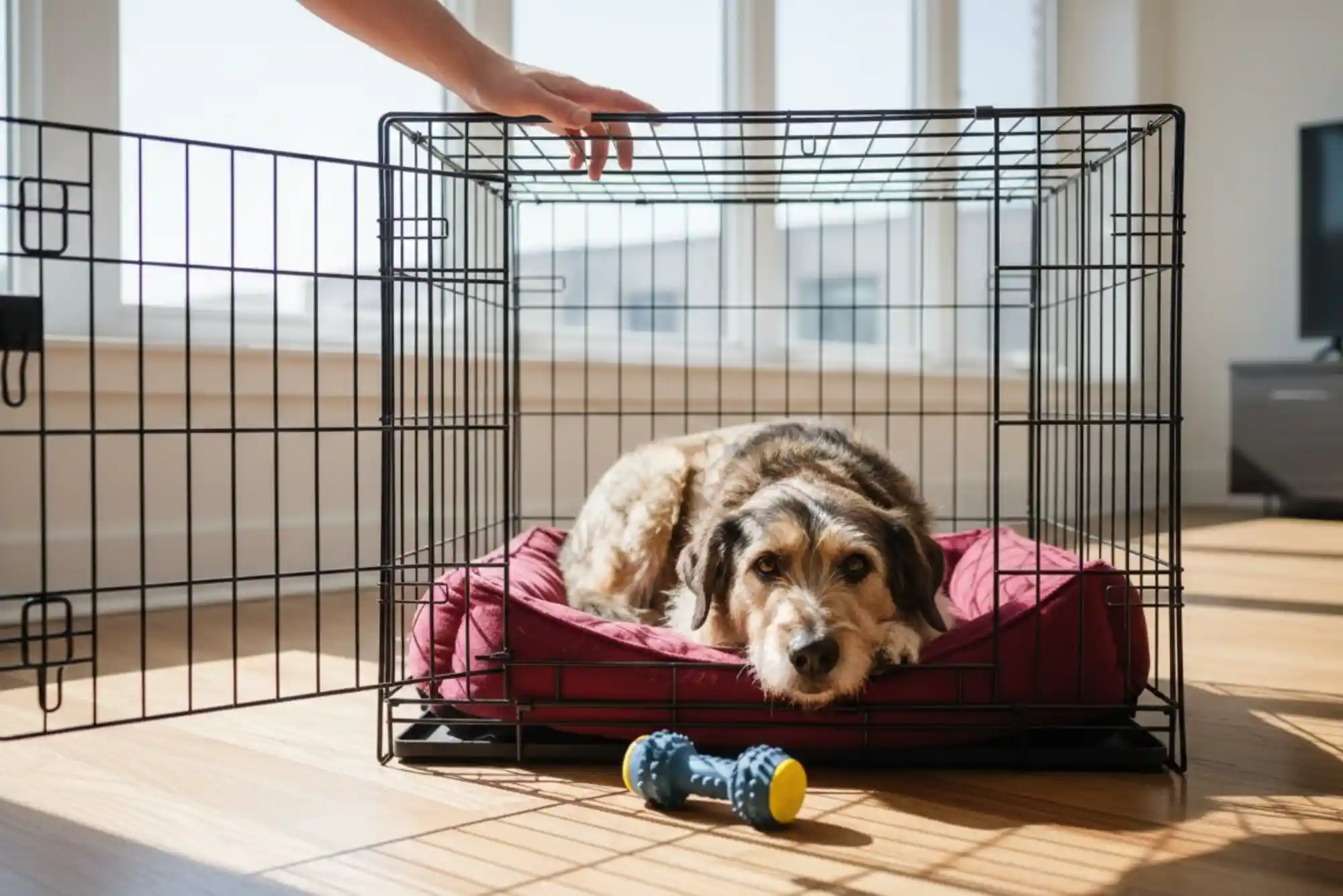
Place the crate in a quiet area where your dog can still see and hear normal household activity. Avoid putting it somewhere isolated, excessively noisy, or directly beside a busy doorway.
Make the crate comfortable with appropriate bedding, provided your dog does not chew or destroy it. For an older dog with stiff joints or mobility problems, comfortable padding can be especially important. A veterinarian can also help determine whether pain or age-related problems are contributing to difficulty settling.
Keep the crate door open initially. Your dog should be able to approach, sniff, investigate, and leave whenever they want.
Teach Your Dog That the Crate Predicts Good Things
The foundation of how to crate train an older rescue dog with separation fears and phobias is positive association.
Do not push your dog inside.
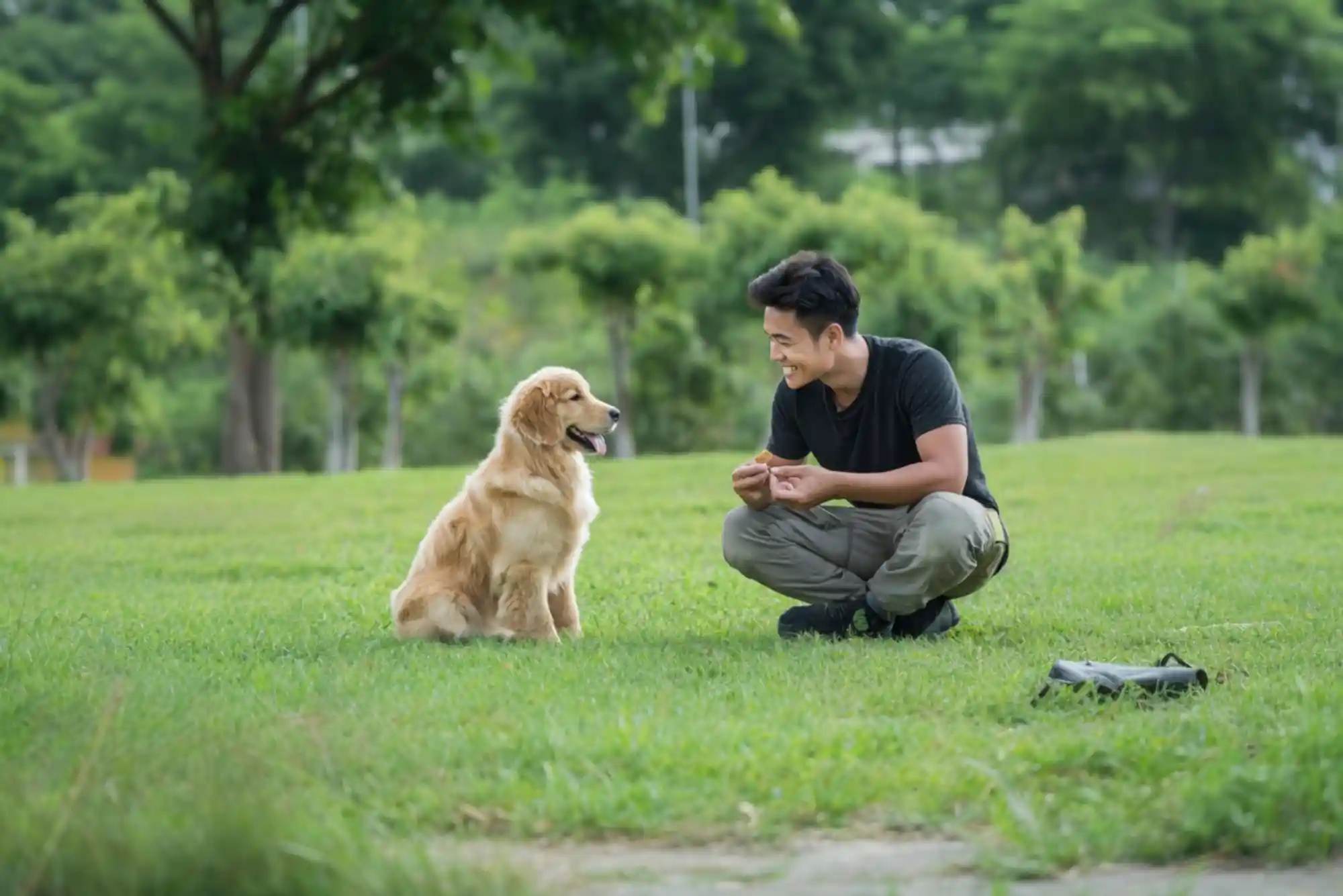
Instead, place a favorite treat near the entrance. Once the dog comfortably approaches, place another treat slightly farther inside. Eventually, the dog may choose to walk inside voluntarily.
At first, there is no need to close the door.
You are teaching a simple emotional lesson: entering this space is safe and rewarding.
You can also offer meals near the crate and gradually move the food closer to the entrance. If your dog willingly eats inside, you can eventually serve meals farther inside the crate. If the dog stops eating or becomes tense, move the bowl back to a comfortable position.
Progress should be measured by relaxation rather than distance.
Introduce the Crate Door Very Slowly
Closing the door is often the point where anxious dogs become uncomfortable.
Once your dog willingly enters and remains relaxed, touch the door without closing it. Reward calm behavior. Then close it for one second and open it again.
Repeat this until the movement itself becomes boring.
Next, try a few seconds. Then perhaps ten seconds. There is no universal timetable because every rescue dog has a different history and tolerance level.
The important principle is to increase duration only while your dog remains comfortable.
If the dog starts panting, whining intensely, pawing at the crate, trying to escape, trembling, or refusing a normally desirable treat, the exercise is probably too difficult. Go back to an easier step rather than forcing the dog to endure it. Refusal of food can be particularly useful information because a highly stressed dog may be unable to learn effectively.
Build Distance Before Leaving the House
A common mistake when learning how to crate train an older rescue dog with separation fears and phobias is moving directly from “my dog stays calmly in the crate” to “I’m leaving for an hour.”
Those are completely different skills.
Start while remaining close to the crate. Sit nearby and read, work, or watch television while your dog relaxes.
Then stand up.
Walk a few steps away.
Return.
Repeat without making your movements exciting.
Eventually, walk into another part of the room for a few seconds. Then briefly step out of sight and return before your dog becomes distressed.
The objective is to teach your dog that your movement does not automatically mean abandonment.
Over time, you can gradually increase distance and duration. If your dog becomes anxious, reduce the difficulty again.
Separate Crate Fear from Separation Anxiety
It is important to determine whether the crate itself is the problem.
Consider what happens when the dog is loose in the house.
If your dog is relaxed while you are nearby but panics immediately when you leave, separation-related distress may be the primary issue. If the dog becomes frightened specifically when the crate door closes, confinement may be the trigger.
Some dogs experience both.
This distinction matters because a crate does not automatically cure separation anxiety. In some dogs, confinement can actually make panic worse. Professional guidance is especially important when a dog shows severe distress or attempts to injure itself while trying to escape.
Use Phobia-Sensitive Training
Older rescue dogs can also develop strong reactions to particular sounds, environments, objects, or situations.
A dog frightened by thunderstorms, fireworks, vacuum cleaners, traffic, unfamiliar people, or sudden noises may have difficulty relaxing in a crate if those triggers occur nearby.
The crate should therefore become a predictable retreat rather than another source of pressure.
During calm periods, give your dog opportunities to rest there. Avoid deliberately exposing the dog to frightening stimuli at an intensity that causes panic.
For example, if a dog fears loud household noises, start at a very low intensity and pair the sound with something pleasant while the dog remains relaxed. Gradual desensitization works best when the dog is not pushed beyond its ability to cope.
Make Crate Time Emotionally Positive
Food can be extremely useful, but it should not be the only source of positive association.
A safe chew, food-filled toy, comfortable bedding, and familiar scent can help the crate become a pleasant resting location.
Some dogs also benefit from a partially covered crate because it can reduce visual stimulation. However, every dog is different. If covering the crate makes your dog more anxious, remove the cover.
Keep departures and returns calm. Long emotional goodbyes can make leaving feel more significant. Instead, develop a predictable routine.
Your dog should learn that you leave, you return, and life continues normally.
Never Use the Crate as Punishment
An anxious rescue dog needs the crate to remain emotionally safe.
Never send your dog into the crate because they misbehaved. Do not yell at them while they are inside, bang on the crate, or use confinement as a punishment.
Doing so can destroy the positive association you have worked hard to create.
The crate should communicate safety, rest, and predictability. If the dog starts viewing it as a place where unpleasant things happen, training can quickly move backward.
Recognize When You Are Moving Too Quickly
Good crate training is not about completing a particular number of days.
Some older rescue dogs progress within weeks. Others require considerably longer. Dogs with significant fear histories may need an especially gradual approach.
Watch your dog’s body language.
A relaxed dog may lie down, chew, sleep, stretch, or calmly look around. A stressed dog may pace, pant excessively, drool, freeze, tremble, vocalize repeatedly, scratch, bite the crate, or desperately attempt to escape.
If these behaviors appear, reduce the intensity of the exercise.
Going backward is not failure. In behavior modification, returning to an easier step is often exactly what allows progress later.
Common Mistakes to Avoid
One of the biggest mistakes is assuming that an older dog should “get used to it.” Flooding a fearful dog with prolonged exposure can increase anxiety rather than teach confidence.
Another mistake is increasing crate time too quickly. A dog that calmly tolerates two minutes is not necessarily ready for thirty minutes.
Using the crate only when you leave can also create an unwanted association. Instead, allow your dog to enjoy the crate while you are home.
Do not force the dog inside, rush through fearful reactions, or ignore signs of severe distress. Positive reinforcement and gradual exposure are central to successful crate training for fearful rescue dogs.
When to Contact a Veterinarian or Behavior Professional
Some cases require more than home training.
Speak with your veterinarian if anxiety is severe, suddenly appears in an older dog, or is accompanied by significant behavioral or physical changes. Pain and age-related medical problems can influence behavior, so they should not be overlooked.
Professional help is particularly important if your dog repeatedly injures themselves trying to escape, experiences extreme panic, cannot settle even with gradual training, or becomes progressively more anxious.
A qualified reward-based trainer or veterinary behavior professional can help identify the trigger and create a behavior-modification plan suited to your individual dog. In some cases, veterinary treatment may also be appropriate alongside training.
Seeking help is not a sign that you have failed. It means you are taking your dog’s welfare seriously.
How Long Does Crate Training an Older Rescue Dog Take?
There is no fixed timeline.
A confident adult dog with no history of confinement may learn relatively quickly. A fearful rescue dog with separation anxiety or phobias may need weeks or longer.
Think in terms of milestones rather than deadlines.
First, your dog should willingly approach the crate. Then they should voluntarily enter. After that, they should remain comfortable with the door moving, then closing briefly, then staying closed while you remain nearby. Only after those steps are reliable should you begin adding distance and absences.
This gradual progression is more sustainable than trying to achieve long periods of confinement quickly.
The Goal Is Confidence, Not Just Compliance
The most important part of how to crate train an older rescue dog with separation fears and phobias is remembering that you are changing an emotional response.
You do not simply want a dog that stays inside because it has no choice.
You want a dog that can enter the crate, relax, and eventually see it as a comfortable place to rest.
That distinction changes everything.
When training is based on trust, gradual exposure, rewards, and careful observation, an older rescue dog can develop confidence even if their earlier experiences were difficult.
Give Your Rescue Dog Time to Trust
Learning how to crate train an older rescue dog with separation fears and phobias requires patience, consistency, and compassion. Start with an open crate, build positive associations, introduce the door gradually, and increase distance only when your dog remains relaxed.
Most importantly, never confuse fear with stubbornness.
Your rescue dog may not know yet that your home is permanent, that you will return after leaving, or that the crate is safe. Those lessons are built through hundreds of small, predictable experiences.
Take the process at your dog’s pace, celebrate small improvements, and seek professional guidance when anxiety becomes severe. With the right approach, the crate can become a genuine safe space rather than another source of fear.
FAQs
Can you crate train an older dog with separation anxiety?
Yes, but the approach must be individualized. If the dog is comfortable in the crate but becomes anxious only when you leave, separation-related training may be needed alongside crate training. If confinement itself causes panic, forcing crate use can make the problem worse.
How do you crate train a rescue dog that has never been crated?
Start by leaving the crate open and allowing the dog to investigate voluntarily. Reward approaches and entries with treats or other positive experiences. Once the dog is comfortable entering, gradually introduce the door before working on duration or distance.
Should I crate my dog if they have separation anxiety?
Not necessarily. Some dogs find crates comforting, while others become more distressed when confined. Observe your dog’s behavior carefully and consider professional help if the dog shows severe anxiety, escape attempts, or self-injury.
How long does it take to crate train an older rescue dog?
The timeline varies considerably. A confident adult dog may progress quickly, while a fearful rescue dog can require several weeks or longer. Progress should be based on the dog’s comfort rather than a predetermined schedule.
How do I stop my older dog from crying in the crate?
First determine why the dog is crying. If the crate is unfamiliar, return to positive introduction exercises. If the crying occurs when you leave, separation anxiety may be involved. Reduce the difficulty and gradually build the dog’s tolerance rather than simply forcing longer confinement.
What should I do if my rescue dog hates the crate?
Do not force the dog inside. Leave the door open, reward calm investigation, and make the surrounding area positive. If the dog shows intense fear, panic, or attempts to escape, stop the exercise and consult a veterinarian or qualified behavior professional.