Introduction
Teaching a dog an emergency recall command is one of the most valuable things you can do for their safety. A dog that immediately turns and runs toward you when called can potentially avoid traffic, dangerous animals, open gates, unsafe areas, or other hazards. Unlike an ordinary “come” cue, an emergency recall should be reserved for situations where you need your dog to respond immediately.
The goal is not to make your dog mechanically obey a word. You want your dog to learn that responding to the emergency recall command is always worth it. Positive reinforcement, carefully controlled practice, high-value rewards, and gradual exposure to distractions can help build that response. Professional dog-training guidance also emphasizes starting in low-distraction environments and increasing difficulty gradually rather than expecting a dog to respond perfectly outdoors from the beginning.
What Is an Emergency Recall Command?
An emergency recall command is a special cue that tells your dog to stop what they are doing and return to you immediately. It may be a word such as “here,” “now,” or another unique sound that your dog does not hear during everyday conversations.
The most important part is that the cue should have a strong, positive history. If you repeatedly use it when you are annoyed, when you want to end play, or when something unpleasant is about to happen, your dog may learn that coming to you predicts something they dislike.
A reliable recall is never a guarantee because dogs are living animals affected by their environment, emotions, instincts, and distractions. However, consistent training can make the response much more dependable. The American Kennel Club describes reliable recall as working toward a response that is highly consistent, while also emphasizing that dogs are not robots and should still be managed safely.
Why an Emergency Recall Command Matters
Imagine your front door accidentally opens and your dog runs toward the road. Perhaps your dog slips out of their collar during a walk or notices a squirrel while exploring an unfenced area. In situations like these, hesitation can create serious danger.

An emergency recall command gives you another layer of control. Instead of chasing your dog or shouting their name repeatedly, you have a practiced signal that means something extremely rewarding.
Recall training also strengthens your dog’s habit of checking in with you. When your dog repeatedly learns that turning toward you leads to food, play, praise, or freedom to continue exploring, paying attention to you becomes valuable.
However, recall training should never replace sensible management. Dogs with unreliable recall should remain on a leash or long line in appropriate areas, and owners should follow local leash regulations.
Choose a Special Emergency Recall Cue
Before teaching an emergency recall command, choose a word or sound that is unlikely to appear in everyday conversation.
You could use a short word such as “here,” “quick,” or another distinctive cue. Some owners prefer a whistle or unusual sound. The exact choice matters less than consistency.
Once you select the cue, protect it. Do not casually repeat it throughout the day. Do not use it when your dog is unlikely to respond. Most importantly, do not use the emergency cue to scold your dog.
Think of the cue as a special promise: when your dog hears it, something exceptionally good is about to happen.
If your existing “come” command has become associated with frustration or repeated unsuccessful calls, consider starting with a fresh cue. Repeatedly saying a recall word without getting a response can weaken its meaning, sometimes creating what trainers call a “poisoned cue.”
Start Training in a Quiet Environment
The first stage of teaching an emergency recall command should be deliberately easy.
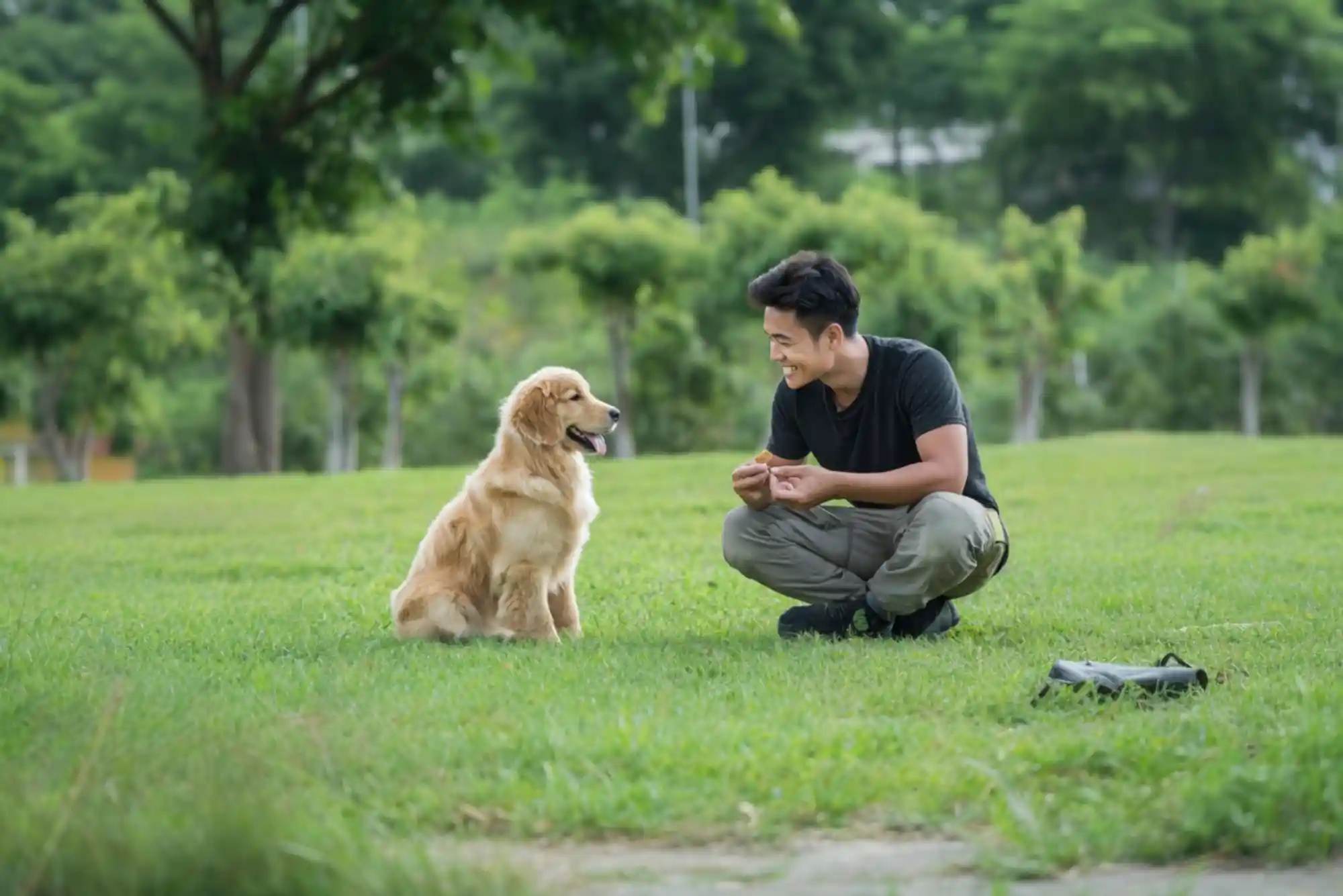
Begin inside your home when your dog is calm and there are very few distractions. Have exceptionally valuable rewards available. Depending on your dog’s preferences, these might include small pieces of cooked chicken, cheese, freeze-dried meat, or a favorite toy.
Say the emergency cue once in an enthusiastic voice. When your dog immediately turns toward you or moves in your direction, reward generously.
At first, you are building an association rather than testing obedience. Your dog needs to learn that the sound itself predicts an excellent outcome.
Keep early sessions short. A handful of successful repetitions is more useful than repeatedly calling your dog until they become bored.
Make Coming to You Extremely Rewarding
The central principle behind a strong emergency recall command is simple: your dog should believe that coming to you is one of the best choices they can make.
When your dog reaches you, make the reward substantial. Give several tiny treats one after another, offer enthusiastic praise, or immediately begin a favorite game.
You can also use a combination of rewards. For a food-motivated dog, food may be the primary reward. For a toy-driven dog, a quick game of tug or fetch may be even more powerful.
Timing matters. Reward your dog immediately after the desired response so they can clearly understand what behavior earned the reward. Consistent, timely feedback helps dogs understand exactly what you are reinforcing.
Build Distance Gradually
Once your dog eagerly responds inside the house, increase the distance little by little.
Move into another room and call your dog. Later, practice from a hallway or across a larger room. You can also incorporate simple movement by walking backward as your dog approaches.
Do not jump immediately from a quiet bedroom to a busy park. Your dog’s ability to respond indoors does not automatically mean they can ignore exciting smells, other dogs, wildlife, bicycles, or people outdoors.
A useful rule is to increase only one major challenge at a time. If you increase distance, keep distractions low. If you introduce a major distraction, reduce the distance.
This approach gives your dog repeated opportunities to succeed rather than repeatedly practicing failure.
Use Recall Games to Build Speed
Training becomes much more effective when your dog thinks recall is a game.
One simple exercise involves tossing a low-value treat a short distance away. When your dog finishes it, give the emergency recall cue and move away from them. When they chase you and reach you, provide the high-value reward.
Hide-and-seek can also be useful once your dog understands the basic behavior. Hide behind a doorway or somewhere safe, give the recall cue, and celebrate enthusiastically when your dog finds you.
Another option is a family recall game. Several people can stand apart and take turns calling the dog, with the person who receives the dog providing a valuable reward.
Games such as these help make movement toward you exciting rather than restrictive. Recall-training resources from the AKC similarly recommend games such as “Find Me,” “Hot Potato,” and chase-style exercises to strengthen recall.
Practice Outside With a Long Line
Outdoor training introduces an entirely different level of difficulty.
Before allowing your dog off leash, practice the emergency recall command in a secure environment. A suitable long line can give your dog room to move while allowing you to maintain physical control.
Start somewhere relatively quiet. Let your dog investigate the environment, then use the emergency cue when they are likely to respond successfully.
If your dog ignores you, do not repeatedly shout the cue. Instead, reduce the difficulty. Move closer, remove the distraction, or return to an easier training environment.
The long line should provide safety and management rather than being used to drag your dog toward you. Gradual progression from a leash to a long line and eventually to carefully selected off-leash environments is recommended for building reliable recall.
Add Distractions Slowly
A dog who recalls perfectly in your living room may behave very differently when they see another dog.
That does not mean your training has failed. It means the environment has become more difficult.
Begin with mild distractions. Your dog might hear someone walking through the house or see a toy nearby. Once they succeed consistently, introduce more challenging distractions.
Eventually, you can practice around people, toys, interesting smells, other dogs at a safe distance, and outdoor activity.
Always adjust the difficulty to your dog’s current ability. If your dog repeatedly ignores the emergency recall command, the distraction level is probably too high or the reward is not valuable enough.
Never Punish Your Dog for Coming Back
One of the biggest mistakes owners make is punishing a dog after finally getting them to return.
Imagine your dog takes several minutes to come back after running away. You finally catch them and immediately yell at them. From your perspective, the frustration is understandable. From your dog’s perspective, however, returning to you just produced something unpleasant.
That can weaken the behavior you desperately want to strengthen.
Even if your dog has made a mistake, reward the return. You can address the management problem later. The immediate priority is reinforcing the decision to come toward you.
Positive recall training specifically recommends avoiding punishment when the dog comes back, even when the response was slower than expected.
Do Not Use the Emergency Cue for Everyday Things
Protect the power of your emergency recall command by using an ordinary cue for routine situations.
For example, if your dog is playing happily and you want to bring them inside for dinner, using the emergency cue every time can eventually make it less special.
Instead, reserve the emergency signal for training sessions and genuine situations where you need an immediate response.
During training, you can occasionally call your dog away from play, reward them heavily, and then release them to continue playing. This teaches your dog that coming to you does not always mean the fun is finished. That distinction is important because repeatedly using recall only to end enjoyable activities can make dogs less willing to respond.
Practice the Emergency Recall Regularly
An emergency recall is not a skill you teach once and forget.
Short practice sessions throughout the week are usually more useful than one long session every few weeks. Keep the exercises upbeat and stop while your dog is still enthusiastic.
As your dog’s response becomes stronger, continue practicing in different safe locations and around gradually increasing distractions.
You should also occasionally provide exceptionally valuable rewards. The dog needs to maintain the expectation that the emergency cue remains special.
Remember that even an excellent recall should not encourage reckless off-leash behavior. There will always be situations where physical management is safer than relying solely on training.
What If Your Dog Ignores the Recall?
If your dog ignores the emergency recall command, resist the temptation to repeat it over and over.
Repeatedly saying the same word without a response can teach your dog that the cue is optional. Instead, calmly move closer or use environmental management to prevent the situation from becoming more difficult.
Then return to a simpler training level.
Ask yourself whether the distraction was too strong, whether the distance was excessive, or whether the reward was not valuable enough. Your goal is to create a training setup in which your dog can succeed.
If recall problems are severe, especially if your dog regularly bolts, chases wildlife, or becomes difficult to control outdoors, working with a qualified professional trainer or veterinary behavior professional can provide individualized guidance.
How Long Does Emergency Recall Training Take?
There is no universal timeline.
Some dogs quickly learn that a special sound predicts extraordinary rewards. Others need weeks or months of gradual practice, particularly if they are easily distracted or have a history of ignoring recall.
The important measure is not how quickly your dog learns the word. It is how consistently they respond in progressively more challenging situations.
Treat the emergency recall command as an ongoing safety skill. Continue reinforcing it even after your dog appears reliable.
Make Recall a Lifelong Safety Skill
Learning how to teach a dog an emergency recall command is about much more than getting your dog to obey a word. You are building an automatic habit that could become extremely valuable when your dog faces an unexpected danger.
Start quietly, reward generously, increase difficulty gradually, and protect the meaning of your emergency cue. Most importantly, make returning to you feel like the best decision your dog could possibly make.
FAQs
What is the best recall command for a dog?
There is no single word that works best for every dog. A short, distinctive cue that your dog does not commonly hear can work very well. The most important factor is how the cue is trained and reinforced. A recall cue should consistently predict something rewarding and should not be used for punishment.
How do I get my dog to come every time when called?
Start in a low-distraction environment and reward your dog generously for responding. Gradually increase distance and distractions rather than expecting immediate success in difficult environments. Avoid repeatedly calling your dog when you know they are unlikely to respond. Even with excellent training, no dog can be guaranteed to respond perfectly in every situation.
What is the best emergency recall word?
The best emergency recall word is one that is distinctive, easy for you to say clearly, and not commonly used in everyday conversation. Some owners choose a unique verbal cue, while others use a whistle or another special sound. Consistent positive reinforcement is more important than the specific word.
How do you teach a dog a strong recall?
Build the recall gradually. Start indoors with very few distractions, reward your dog immediately for approaching, increase distance, introduce recall games, and eventually practice outdoors using appropriate leash or long-line management. Training should remain positive and enjoyable.
How do you train an emergency recall for a dog that runs away?
Start by creating a new, highly rewarding recall cue rather than repeatedly shouting an old cue that your dog already ignores. Practice at close distances in safe environments and use a long line outdoors when appropriate. Never chase the dog as a game; moving away from the dog can encourage them to follow you.
Should you say a dog’s name before the recall command?
A dog’s name can be useful for getting attention before the recall cue, especially during early training. However, avoid repeatedly saying the name when the dog is not responding. If the dog cannot respond at the current distance or distraction level, make the exercise easier instead.